
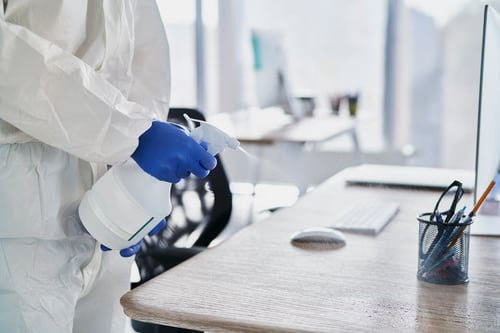
Most commercial cleaning routines are built around what is visible. But the surfaces that actually spread illness through a workplace are rarely the ones that look dirty.
The genuinely high-touch list
In a typical small office or salon, these surfaces are contacted dozens of times a day and cleaned far less often than desks or floors.
- Door handles, push plates, and handrails
- Light switches and thermostat controls
- Shared keyboards, mice, and card readers
- Kettle handles, fridge doors, and microwave keypads
- Restroom taps, dispensers, and cubicle latches
- Chair arms and adjustment levers
Cleaning and disinfecting are not the same
Cleaning removes visible soil. Disinfecting kills what remains. Doing the second without the first is largely ineffective, because disinfectant cannot reach through a layer of grime.
The order matters: clean the surface, then apply disinfectant and let it sit. Nearly every product has a required dwell time — usually thirty seconds to several minutes — and wiping it off immediately means it never actually worked.
Frequency should follow traffic
A private office used by two people does not need the same schedule as a salon with clients arriving hourly. Client-facing and shared spaces need daily attention; low-traffic private areas can be less frequent without any real risk.
For salons and treatment rooms specifically, surfaces between clients matter more than end-of-day cleaning. That is the interval where transmission actually occurs.
Presentation is part of the service
For any client-facing business, cleanliness is read as competence. Clients who notice a smudged glass door or a poorly stocked restroom quietly form conclusions about everything else.
That is why we schedule commercial work before opening or after closing wherever possible — clients should only ever see the finished result, never the process.
We clean offices, salons, studios, and treatment rooms across Lancaster County on flexible after-hours schedules. Ask for a walkthrough and a written scope.