
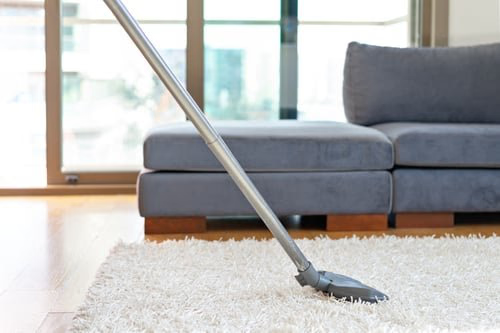
You can clean every hard surface in a room and still have it smell tired, because soft surfaces hold onto far more than they show. Carpets, rugs, and upholstery need a different approach.
Vacuum slower than feels necessary
The most common vacuuming mistake is speed. Moving quickly lifts surface debris but leaves the grit sitting deep in the pile, and that grit is abrasive — it cuts fibres every time the carpet is walked on.
Two or three slow passes in different directions removes considerably more than six fast ones. In high-traffic areas, that difference is what determines whether a carpet lasts eight years or fifteen.
Blot spills, never rub
Rubbing a spill pushes it deeper into the pile and damages the fibres, which is why rubbed stains often reappear weeks later as the residue wicks back to the surface.
Blot with a clean white cloth, working from the outside of the spill inward so it does not spread. White cloth matters — coloured fabric can transfer dye into damp fibres.
- Blot immediately; time is the biggest factor
- Work from the outside of the spill inward
- Use white cloths only, never coloured
- Test any product on a hidden section first
Rotate and redistribute
Rugs and loose cushions wear unevenly because traffic and sunlight are never evenly distributed. Rotating rugs twice a year and flipping cushions monthly spreads that wear out considerably.
For upholstery, vacuum the crevices and beneath the cushions as part of your normal routine. That is where crumbs, dust, and odour actually accumulate.
Know the limits of maintenance
Good habits extend the interval between professional cleans, but they do not replace them. Deep-set soil and odour eventually need extraction, and by then no amount of vacuuming will reach it.
For most households, professional soft-surface cleaning every twelve to eighteen months is enough — sooner with pets or allergies.
Soft-surface care can be built into a customised cleaning plan alongside your regular service. We are happy to advise on the right interval for your home.